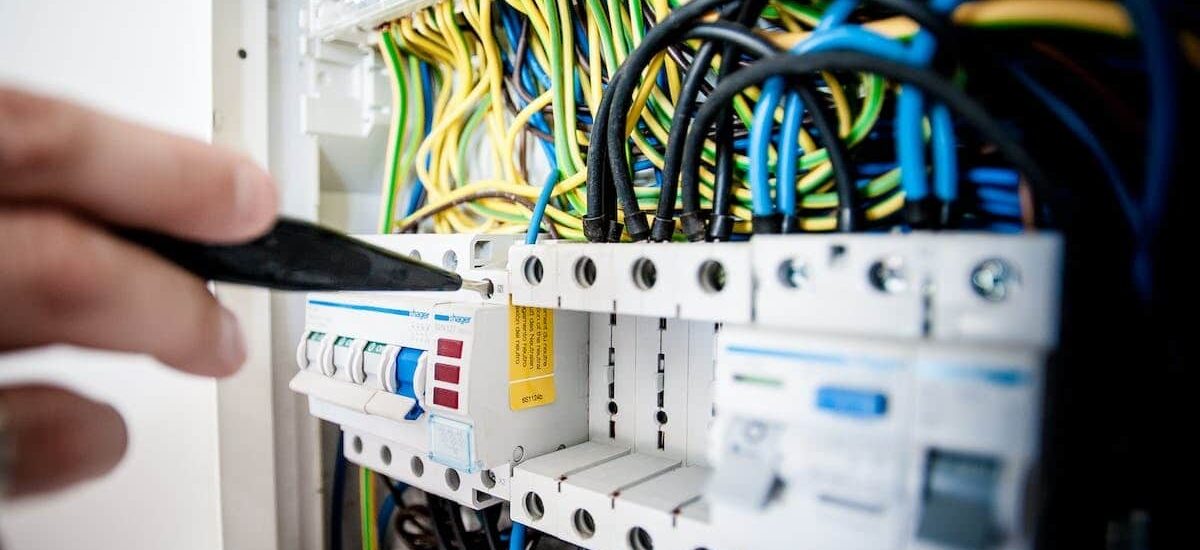
In the wide range of DIY tasks, the one that involves selecting and installing the appropriate circuit breakers to secure an electrical installation is of crucial importance. The safety of your home and its occupants greatly depends on this choice. Too often overlooked, this task requires particular attention, as an inappropriate choice can lead to disastrous consequences. Le Jardineur, in its quest to provide practical and reliable advice, examines the issue and offers precise guidelines to help you make the right choice.
Secure electrical installation: essential basics
In the section ‘The basics of secure electrical installation‘, a recurring question that needs clarification concerns the exact number of circuit breakers that can be installed on a 40A 30mA residual current device. This specific topic, often phrased as ‘how many circuit breakers on a 40A 30mA residual current device’, is vital for ensuring a safe and efficient domestic electrical installation.
To put it simply, a residual current device such as this • namely, a model rated at 40 A with a sensitivity of 30 mA • primarily functions to assess any potential current leaks to the ground and automatically interrupt the power supply upon detecting the slightest risk.
Regarding the precise number of circuit breakers that can be associated with this crucial equipment: it is essential to understand that this depends primarily on the specific requirements of the circuit in question. Nevertheless, in most standard installations, it is possible to mount up to eight branch circuit breakers on a single residual current device without compromising its effectiveness or safety.
However, this rule is not set in stone; it can vary depending on factors such as the total power demand of the devices connected to the network. If your installation requires more than the theoretical maximum of eight circuits protected by each panel (via this same type of device), it will then be necessary, even imperative, to consider the additional use of other devices to avoid exceeding the maximum capacity of each device, here set at 40A.
Circuit breakers: which types to choose
In a previous article, we discussed the basics of secure electrical installation and the question of how many circuit breakers can be installed on a 40A 30mA residual current device. Now, let’s look at the different types of circuit breakers available on the market.
Branch circuit breakers: These breakers are used to protect each individual circuit of your electrical installation. They allow for isolation and cut off the power supply in case of a short circuit or overload. The main advantages of branch circuit breakers are their ease of use and their ability to quickly restore power after a cut.
Residual current breakers: Also known as residual current devices, these devices are designed to detect current leaks to the ground and automatically interrupt the power supply in case of a potential danger to the safety of people or equipment. There are different sensitivities for residual current devices, notably 30 mA (milliamperes), which is recommended for domestic installations.
Magnetic thermal circuit breakers: These specific types of breakers combine both thermal protection against overloads and magnetic protection against short circuits. They can be manually reset after being triggered by an undesirable event such as overheating or a short circuit.
The fuse circuit breaker: Although less commonly used today, it is still important to mention. This protection device consists of a fuse that melts in case of overload or short circuit, thus cutting off the electrical supply. It must then be manually replaced to restore power.
It is important to mention that each type of circuit breaker has its own technical specifications and capabilities. Be sure to select the right model based on the specific needs of your electrical installation.
Choosing the right circuit breakers for a secure electrical installation requires a thorough understanding of the different types available on the market.
Criteria for choosing a circuit breaker: keys to electrical safety
When choosing a circuit breaker for your electrical installation, certain criteria must be taken into account to ensure optimal safety. Here are the key elements to consider:
The breaking capacity: This refers to the circuit breaker’s ability to interrupt the current in case of a short circuit or overload. It is a crucial indicator that must be adapted to the specific requirements of your electrical system.
The sensitivity: To ensure effective protection against current leaks and minimize the risk of electric shock, it is essential to opt for a circuit breaker with adequate sensitivity. Generally expressed in milliamperes (mA), this value indicates the threshold beyond which the circuit interruption occurs.
The technical characteristics: Each type of circuit breaker has technical specifications such as nominal voltage, maximum supported power, or the maximum number of poles available. Ensure that these characteristics match the specific needs of your installation.
Standards for a safe electrical installation: rules to follow
When you want to carry out a secure electrical installation, you must comply with the current standards. In France, the regulations governing electrical installations are defined by the NF C 15-1 standard. This standard establishes a set of rules and recommendations aimed at ensuring the safety of people and property.
The first thing to consider is the choice of the circuit breaker itself. It must comply with the guidelines of the NF EN 60898 or NF EN 60947-2 standard depending on its use (domestic or industrial). It is also important to ensure that the circuit breaker is CE certified, meaning it meets harmonized European requirements.
You must respect the minimum distances between the different components of the electrical installation, such as residual current devices and other protection devices. These distances are determined by regulations to avoid any risk of electrical arc that could lead to a fire.
Regarding labeling, each circuit must be clearly identified on the electrical panel with standardized markers indicating its destination (outlets, lighting…) as well as its maximum allowed power.
Attention must also be paid to the grounding of the electrical installation. This must be carried out in accordance with the rules established by the NF C 15-100 standard to avoid any risk of electric shock in case of insulation failure.
A periodic inspection of the installation is essential to ensure the proper functioning of the circuit breakers and other protection devices. It is recommended to consult a qualified professional who will carry out the necessary checks and issue a certificate of compliance if all standards are met.
Adhering to these standards ensures a secure electrical installation, thereby minimizing the risks of accidents related to electricity. Do not hesitate to seek the advice and services of a professional to assist you in this crucial process.