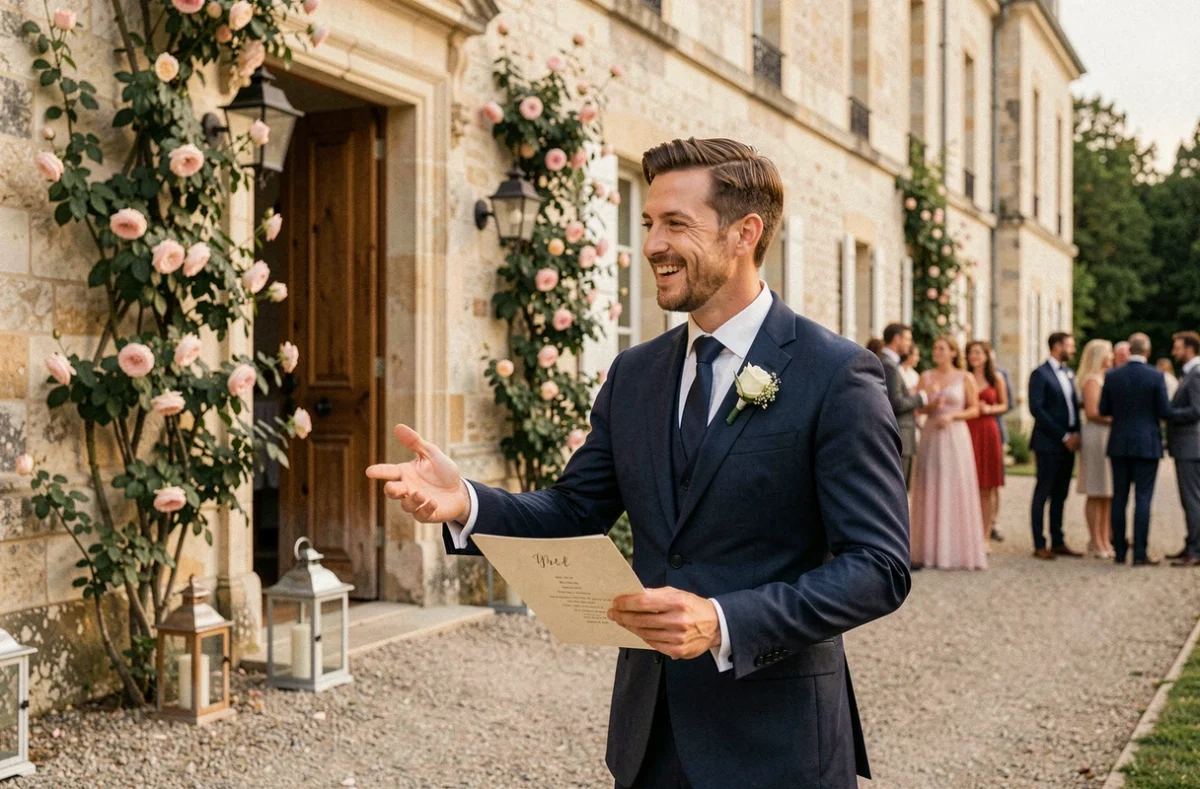
The welcome of guests at a wedding sets the tone for the entire day. Even before the first speech or the first dance, it is the quality of the arrival that anchors the experience in memories. Every logistical, sensory, or human detail weighs on the overall feeling of the guests, whether they are close friends or distant acquaintances.
1. Accessibility audit of the venue before signing the contract
The choice of the venue determines the welcome long before the big day. According to the Domaine de Beaulieu, the criteria to check include step-free pathways, door widths, elevators, accessible restrooms, and the distance between parking, ceremony, and reception.
These checks concern people with reduced mobility, elderly guests, and families with strollers. A beautiful but inaccessible venue generates silent frustrations that no one will point out to you afterward.
Plan a visit dedicated solely to this topic, ideally with a close person affected by these constraints. Photographing each narrow passage or level difference allows for a calm decision between two comparable venues, and to find welcome ideas on Passion Mariage that take this logistical dimension into account.
2. Operational weather plan for outdoor ceremonies
A vague “plan B” is not enough. Recent recommendations, particularly those from Mariage Pratique, call for a backup plan tested in advance, shaded or cooling areas, sound systems suited to outdoor conditions, and stable seating on natural terrain.
Using a beach, public space, or certain venues may require official permission. Checking this several weeks before the date avoids an unpleasant administrative surprise.
3. Physical comfort kit distributed upon arrival
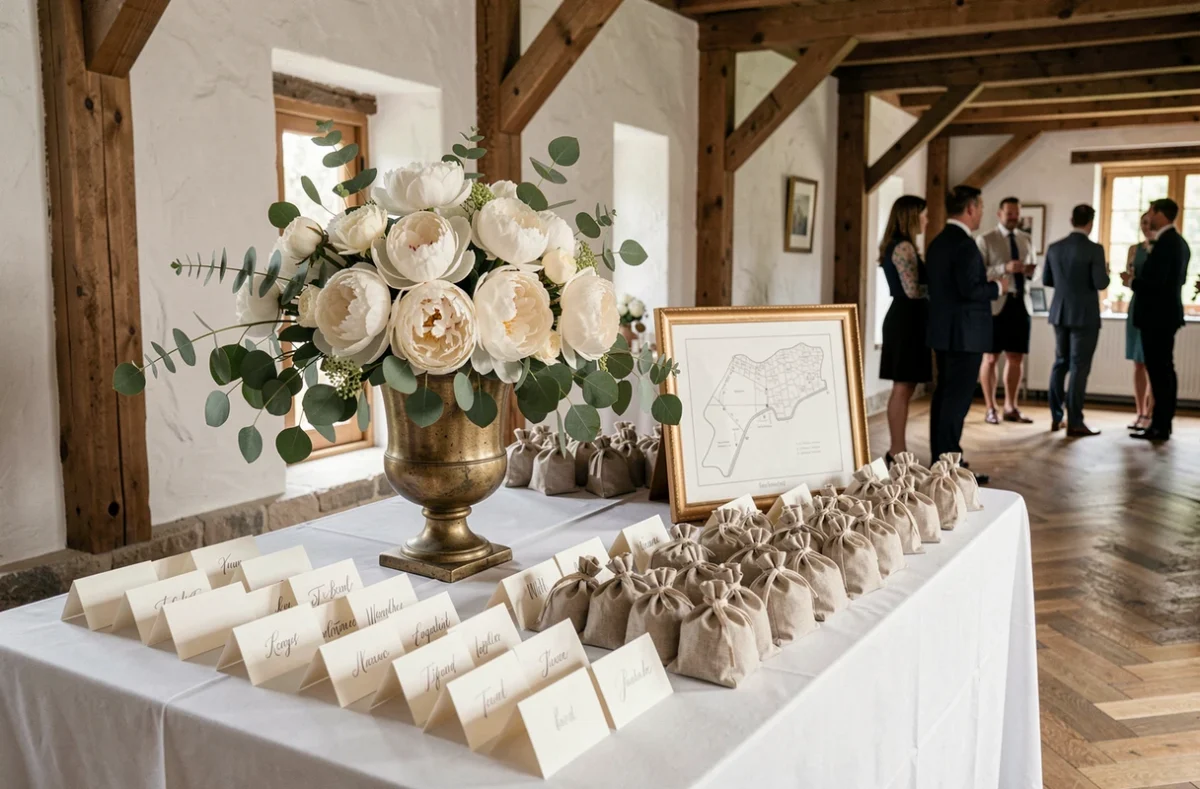
A basket or tote bag placed on each chair or handed out at the entrance changes the perception of the welcome. The contents vary according to the season and location.
- Summer outdoors: fan, misting spray, travel-sized sunscreen, bottle of cold water
- Autumn evening: light blanket, hand warmers, cloth handkerchiefs
- All seasons: blister plasters (heels on gravel), refreshing wipes, throat lozenges after singing
This material gesture reflects concrete attention. It costs little per guest, but it eliminates the micro-discomforts that accumulate over the hours.
4. Briefing an identifiable welcome committee
Designating two or three close friends as “welcome references” prevents the couple from being approached for every logistical question. These individuals wear a discreet distinguishing sign (brooch, flower, colored ribbon) and know the schedule, location of restrooms, table plan, and timings.
Their role goes beyond simple orientation. They spot isolated guests, introduce attendees who do not know each other, and serve as a relay in case of medical or logistical emergencies.
5. Consistent signage from parking to table
Elegant signs are useless if they stop at the entrance of the venue. The signage must cover parking, the path to the ceremony, the passage to the cocktail, and then the reception hall. Each transition between locations is a moment where guests hesitate.
A continuous marked path reduces guests’ anxiety who are unfamiliar with the venue. Use the same graphic code as your invitations to maintain visual consistency.
6. Welcome cocktail calibrated to actual timing
The cocktail hour often lasts longer than expected, especially when group photos take a long time. Planning enough appetizers to cover a duration exceeding half an hour beyond the initial slot avoids an unpleasant lull.
Vary the options: offer at least one visible and accessible non-alcoholic alternative without having to ask for it. Guests who do not drink should not have to justify their choice in front of the server.
7. Quiet space separate from the reception area
Not all guests can handle several hours of loud music and conversations. Setting up a quiet corner with comfortable seating, away from the dance floor but still within the party perimeter, allows elderly guests, tired attendees, or introverts to take a breather without leaving the reception.
This space also serves as a retreat for parents whose children need a moment of calm.
8. Management of accommodations near the venue
Providing a list of accommodations with contact details and distance from the reception venue makes life easier for guests coming from afar. Some venues allow overnight stays, which eliminates transportation issues at the end of the evening.
Offering on-site accommodation reduces guests’ logistical stress and naturally extends the celebration. If the venue does not allow it, organizing a shuttle or carpool system between the hall and nearby hotels remains a practical alternative.
9. Formalized management of unforeseen events on the big day
The present vendors (caterer, DJ, photographer, coordinator) must know who decides in case of a problem. Mariage Pratique emphasizes the importance of defining each vendor’s role in advance in the face of weather or logistical unforeseen events.
- Identify a single family contact for quick decisions
- Prepare an emergency kit (sewing kit, stain remover, pain relievers, phone chargers)
- Plan a buffer slot in the schedule to absorb delays without pushing back the meal
10. Protection of personal data collected via the wedding website
Online wedding sites often collect names, addresses, dietary preferences, and sometimes photos. This information falls under the GDPR framework. The couple is responsible for processing this data, even on a third-party platform.
Limiting the collection to what is strictly necessary, informing guests of the intended use, and deleting the data after the event are simple reflexes that protect guests’ privacy. This point, rarely addressed in wedding guides, becomes increasingly relevant as digital guest management tools multiply.
Accessibility of the venue, management of unforeseen events, physical comfort, and respect for privacy form a foundation that transforms a beautiful celebration into an experience where everyone feels valued.