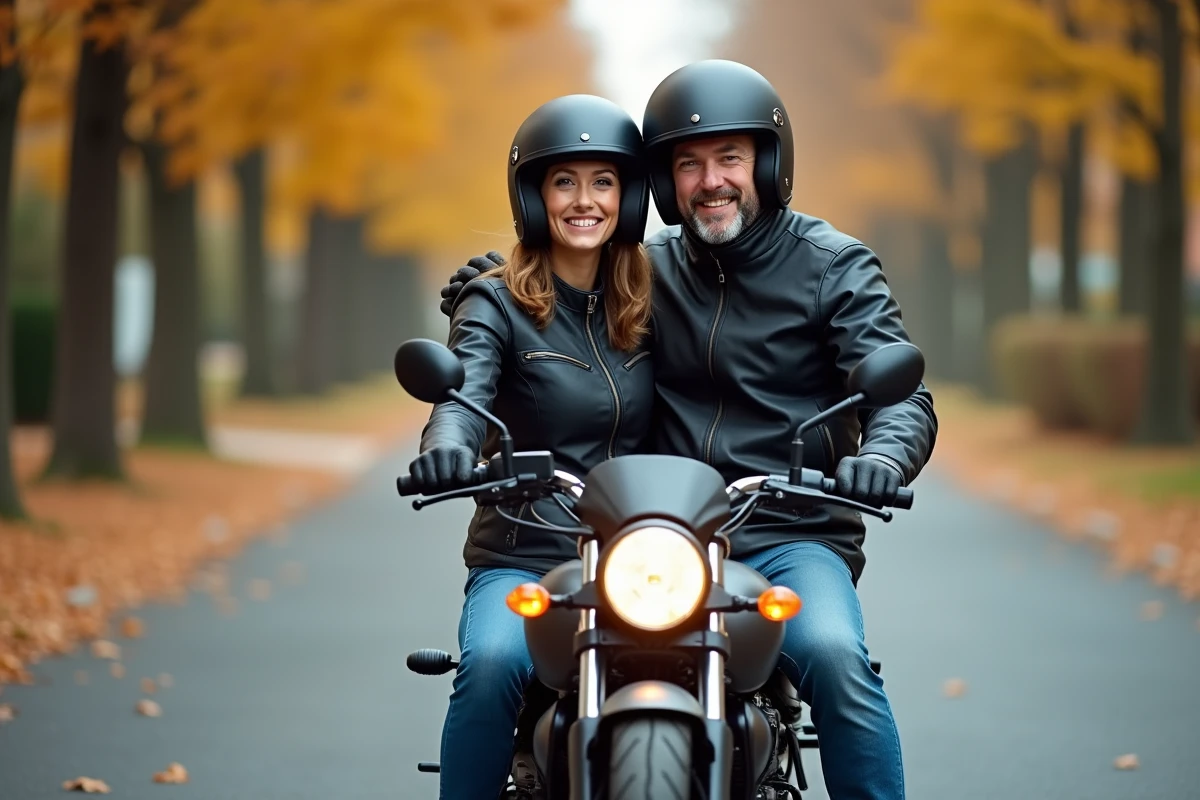
Loading a passenger on a 125 is the test that reveals a motorcycle’s weaknesses in just a few kilometers. Narrow seat, bottoming out suspensions, engine struggling on hills: riding two-up on this displacement quickly exposes the manufacturer’s compromises. The Benda 125, with its custom architecture and V-twin engine, promises a duo experience above average. We wanted to check how it performs in practice, with a loaded seat and open road.
Seat and passenger ergonomics on the Benda 125: what changes the game for two-up riding
On most 125 customs, the rear seat is a symbolic piece of foam stuck behind the rider. The Benda Napoleon offers a wider seat than the average in its category, with a passenger space that allows sitting without straddling the fender.
The rear footpegs are positioned at a height that prevents the passenger from having to fold their knees against their sides. Compared to a Honda CB125R, for example, the passenger space is significantly more generous and the custom position, with legs forward, distributes weight better on the seat. To delve deeper into this point, you can read the review on Auto l’Hebdo that details the dimensions and field feedback.
The downside: the seat remains firm. On a journey longer than an hour without a break, the passenger starts to feel every imperfection in the pavement. Adding a gel cushion or an aftermarket seat significantly improves comfort, but it’s an additional cost to consider from the purchase.
Suspensions and road holding of the Benda 125 loaded with two
This is where the Benda clearly distinguishes itself from its direct competitors. The rear shocks are adjustable in preload, allowing compensation for the passenger’s weight without the motorcycle bottoming out on speed bumps.
You adjust the preload to the maximum before heading out with two, and the difference is noticeable: the motorcycle maintains a stable stance even on degraded roads. On models like the Magpower Avenger, where the shocks are not adjustable, riding two-up turns every pothole into a jolt transmitted directly to the spine.
Braking with a passenger: the point to watch
With the extra weight, braking distances increase. The Benda offers ABS as an option, a choice not to be overlooked for two-up riding. The standard CBS brakes adequately when solo, but with two on wet pavement, ABS provides a safety margin that CBS alone does not guarantee.
- Check the preload of the rear shocks before each two-up ride (adjustable knob accessible without tools)
- Prefer the ABS option over the simple CBS if riding two-up frequently
- Check tire pressure: add a few tenths of a bar to the rear according to manufacturer recommendations
V-twin engine and two-up behavior on the road
The V-twin engine of the Benda 125 delivers contained power, like any 125, but its torque curve is more usable than a classic single-cylinder. With two, you can feel that the engine accepts the load without choking on low-rev acceleration.
On national roads and in urban areas, the acceleration remains strong up to a reasonable speed plateau. This is not a scooter that revs high: the V2 gives a rounder engine character, with contained vibrations at intermediate revs.
Overheating on prolonged two-up rides: a field feedback to know
Users report a rapid temperature rise of the engine during two-up rides on highways beyond fifty kilometers. The twin-cylinder, being more compact than a single-cylinder, dissipates heat less effectively when running for long periods at high revs with a heavy load.
Feedback on this point varies depending on conditions. In cool weather or in the city with frequent stops, the problem does not arise. On the highway in summer, full throttle for an hour is another story. Planning regular breaks on long two-up trips in hot weather remains the simplest precaution.
Benda 125 two-up for daily use: for what purpose and what profile
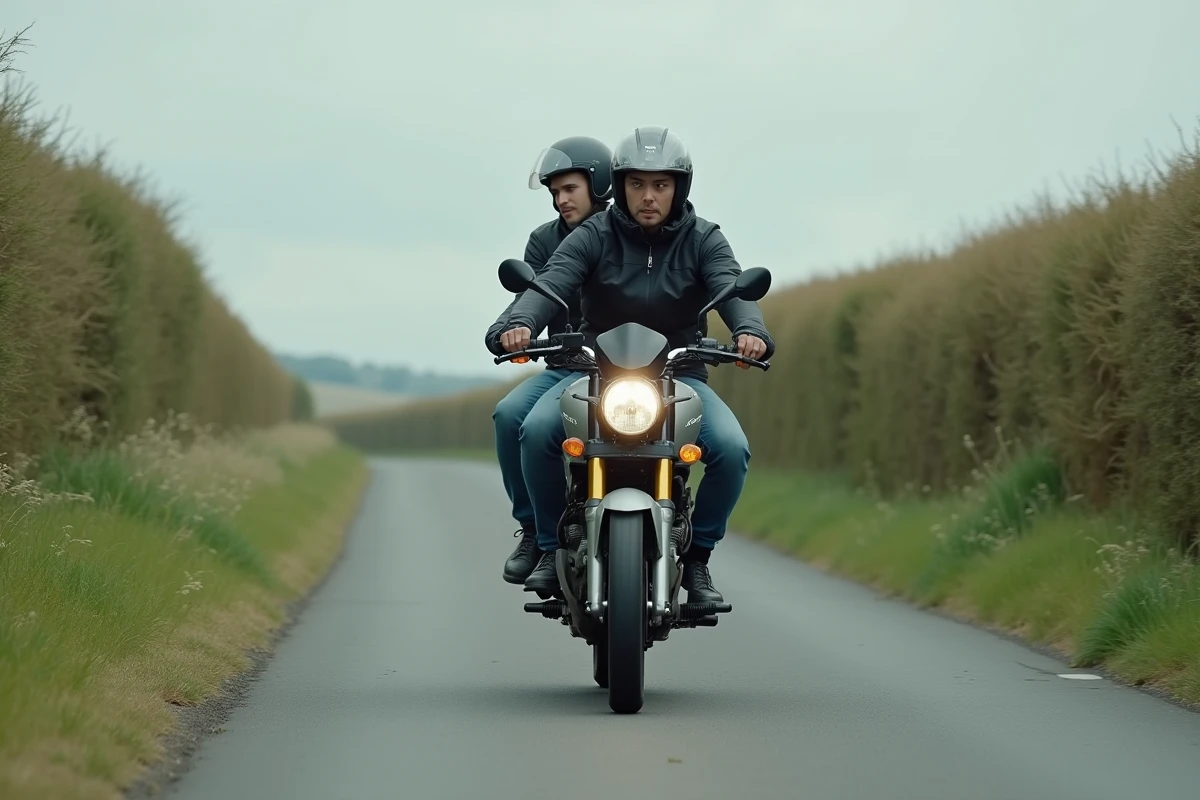
The question is not whether the Benda 125 can ride with two. Legally and technically, yes. The real question concerns the type of journey and the morphology of the two occupants.
For urban and suburban trips of less than an hour, the Benda 125 fulfills its contract. The custom position, properly sized seat, and adjustable suspensions make it one of the most welcoming 125s for an occasional passenger.
For rides lasting several hours or loaded weekend getaways, the limitations of the displacement become apparent. The lack of power uphill with two people and luggage, the potential overheating on highways, and the absence of a standard passenger backrest reduce long-distance comfort.
- Urban and suburban duo (less than 50 km): the Benda 125 is comfortable and at ease
- Departmental rides on weekends (50 to 100 km): acceptable with breaks and adjusted preload
- Long highway or mountain trips: the 125 reaches its limits, regardless of the brand
A light couple (less than 150 kg with gear) will enjoy the motorcycle much more than a heavier duo, which will put more strain on the engine and brakes.
The Benda 125 does not turn a 125 into a touring bike. It pushes the usual limits of the category for two-up riding, thanks to technical choices (V2, adjustable suspensions, wider seat) that most of its competitors do not offer at this price level. For regular but reasonable two-up use, it is currently one of the most coherent options in the 125 custom market.